Global temperatures are rising – faster than you may fathom.
Earth is now heating at about 0.3°C per decade, an extraordinary rate in geological terms. As the Intergovernmental Panel on Climate Change (IPCC) puts it:
‘Global surface temperature has increased faster since 1970 than in any other 50-year period over at least the last 2000 years' — IPCC 2023
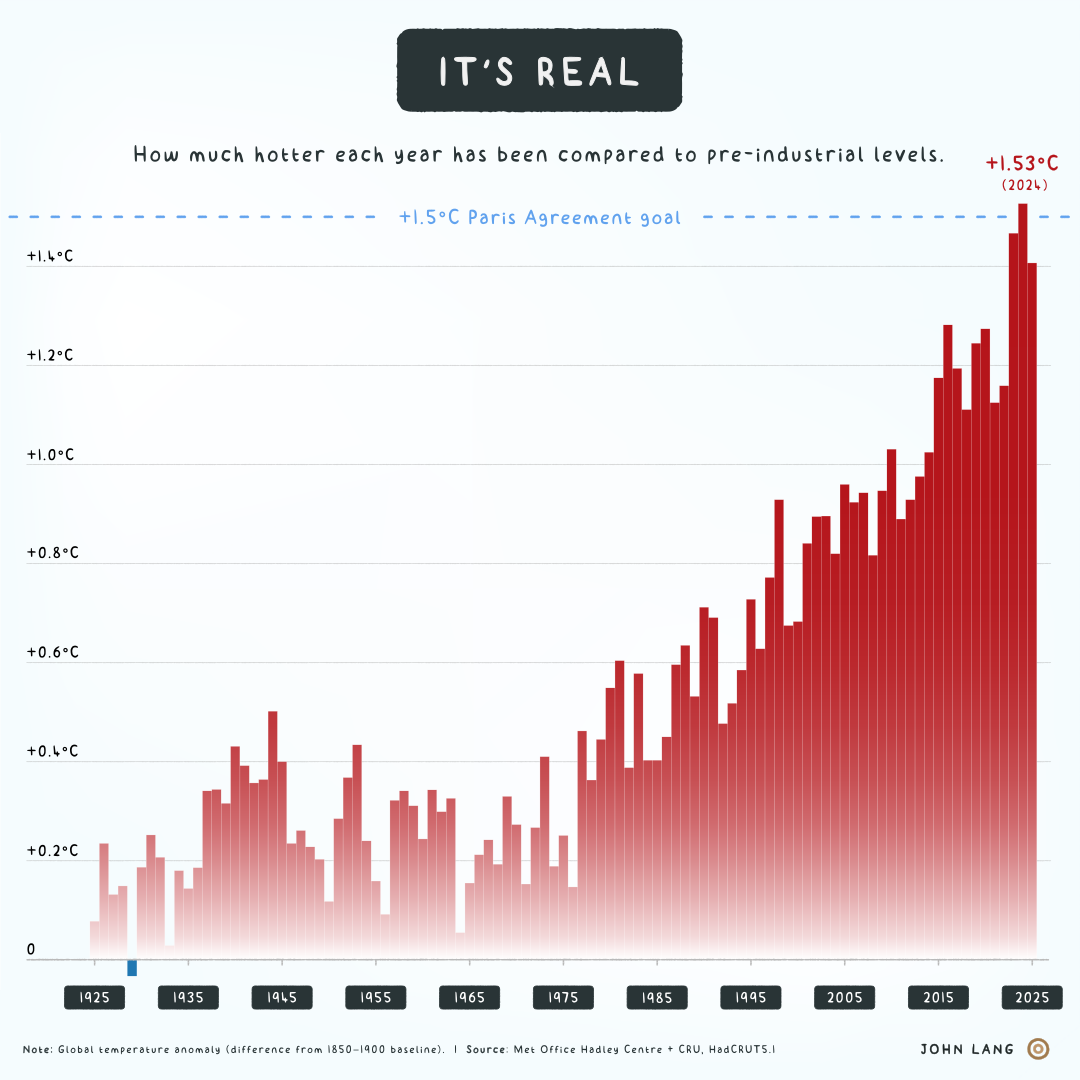
On average, the planet has heated by around 1.3°C since the late 19th century, with the vast bulk of that increase happening in recent decades. On land – where people actually live – the average increase is about 2°C. And in the Arctic, heating is happening around three to four times faster than the global average. And there is strengthening evidence that this underlying rate of heating is accelerating, supported by multiple lines of evidence, from surface temperatures to ocean heat content and the planet’s energy imbalance.
In 2024, global average temperature reached 1.53°C above a preindustrial (1850-1900) baseline, making it the hottest year ever recorded. Importantly, that does not mean the Paris Agreement’s goal of limiting heating to 1.5°C has been formally breached – that refers to a long-term average over decades, not a single year. But there’s no glossing over it: it’s a warning that the world is moving rapidly towards that globally agreed guardrail.
The 1.5°C limit matters for both scientific and political reasons. It was championed by Small Island Developing States and other vulnerable countries during the Paris negotiations because unacceptable risks rise beyond it. Science confirmed that in 2018: every additional fraction of a degree brings more intense heat, heavier rainfall, faster sea-level rise and greater strain on ecosystems. While some overshoot is now inevitable, 1.5°C still matters. For at least two reasons: there is no ‘safe amount’ of global heating – every fraction of a degree matters – and it is technically possible to bring temperatures back down following an overshoot, through large-scale carbon removals, limiting both its scale and duration.
Every increment of heating increases the odds of real-world harm – and raises the risk of crossing thresholds that cannot easily be reversed on timescales relevant to human beings.
Climate change doesn't ‘cause’ every extreme weather event on its own, but acts as a threat multiplier, making many weather extremes more intense or more likely. Take just one example: for every 1°C of global heating, the atmosphere can hold about 7% more water vapour. That means when it rains, it pours.
Short-term natural variability – including the El Niño–Southern Oscillation (ENSO) climate cycle – can temporarily push temperatures up or down. But these fluctuations sit on top of a much larger human-driven trend.
Global heating is real and the rate is unlike anything human societies have ever experienced.